Collaboration and sustainable management of cultural routes in Slovenia
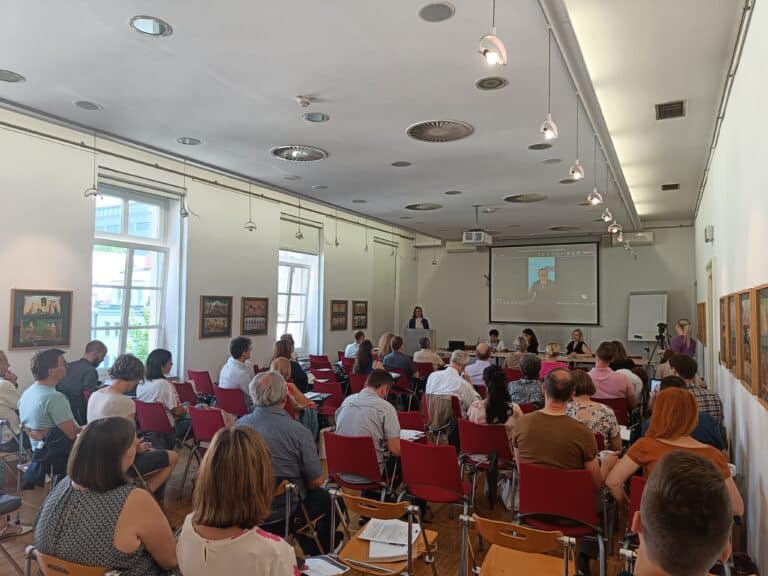
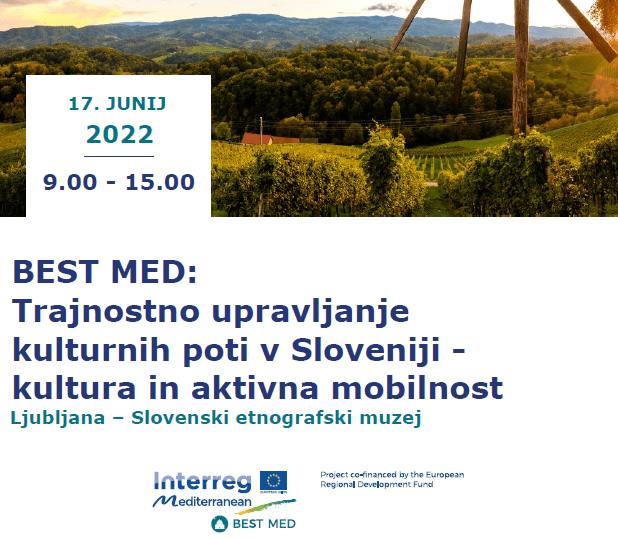
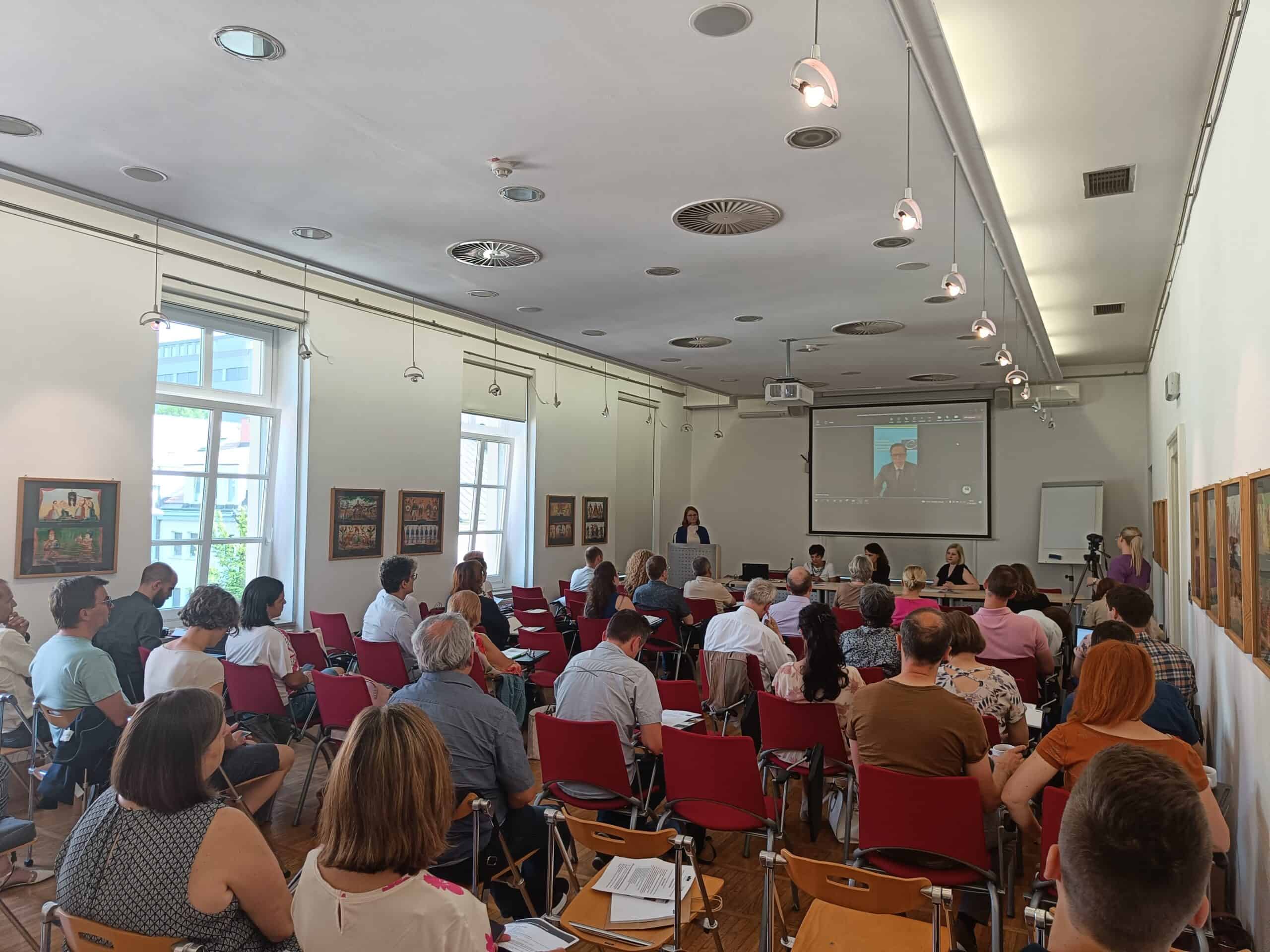
The Faculty of Tourism of the University of Maribor, which became a connecting link of Slovenia's cultural routes as part of the Interreg Mediterranean BEST MED project, organized the event named Sustainable management of cultural routes in Slovenia: Culture and Active Mobility, which took place on Friday, 17th June 2022 in Slovenian Ethnographic Museum. The event was attended by many representatives of cultural and thematic routes in Slovenia and representatives of cultural policies in Slovenia.
The participants were addressed by the Interreg Mediterranean BEST MED project coordinator, Assoc. Prof. Maja Turnšek, PhD, from the Faculty of Tourism of the University of Maribor. Stefano Dominioni, PhD., Director of the European Institute of Cultural Routes of the Council of Europe, gave the following introductory address. On behalf of the Directorate for Tourism (Ministry of Economic Development and Technology of the Republic of Slovenia), Ms Ksenija Flegar also addressed the gathering. Ms Irena Marš gave the last introductory speech in the name of the Directorate for Cultural Heritage (Ministry of Culture of the Republic of Slovenia).
One of the primary purposes of the event was to present eight cultural routes of the Council of Europe in Slovenia: Réseau Art Nouveau Network, European Cemeteries Route, Impressionism Routes, Iter Vitis Route, Women Writers Route, Routes of Reformation, Saint Martin of Tours Route and the Iron Age Danube Route. The European Network of Holy Week and Easter celebrations, the candidate for the certificate as Cultural Route of the Council of Europe, was also presented.
In the continuation of the event, four examples of good practices were presented, which can provide answers to the needs of cultural paths in Slovenia; namely: How to build strong interregional governance (Maša Klavora, Walk of Peace), How to organize a network of tourism providers (Klemen Langus, Juliana Trail), How to involve the local community (Mateja Hafner Dolenc, Association of Historic Towns of Slovenia) and What are the advantages and disadvantages of collaborating? (Matej Kandare, Slovenia Outdoor GIZ).
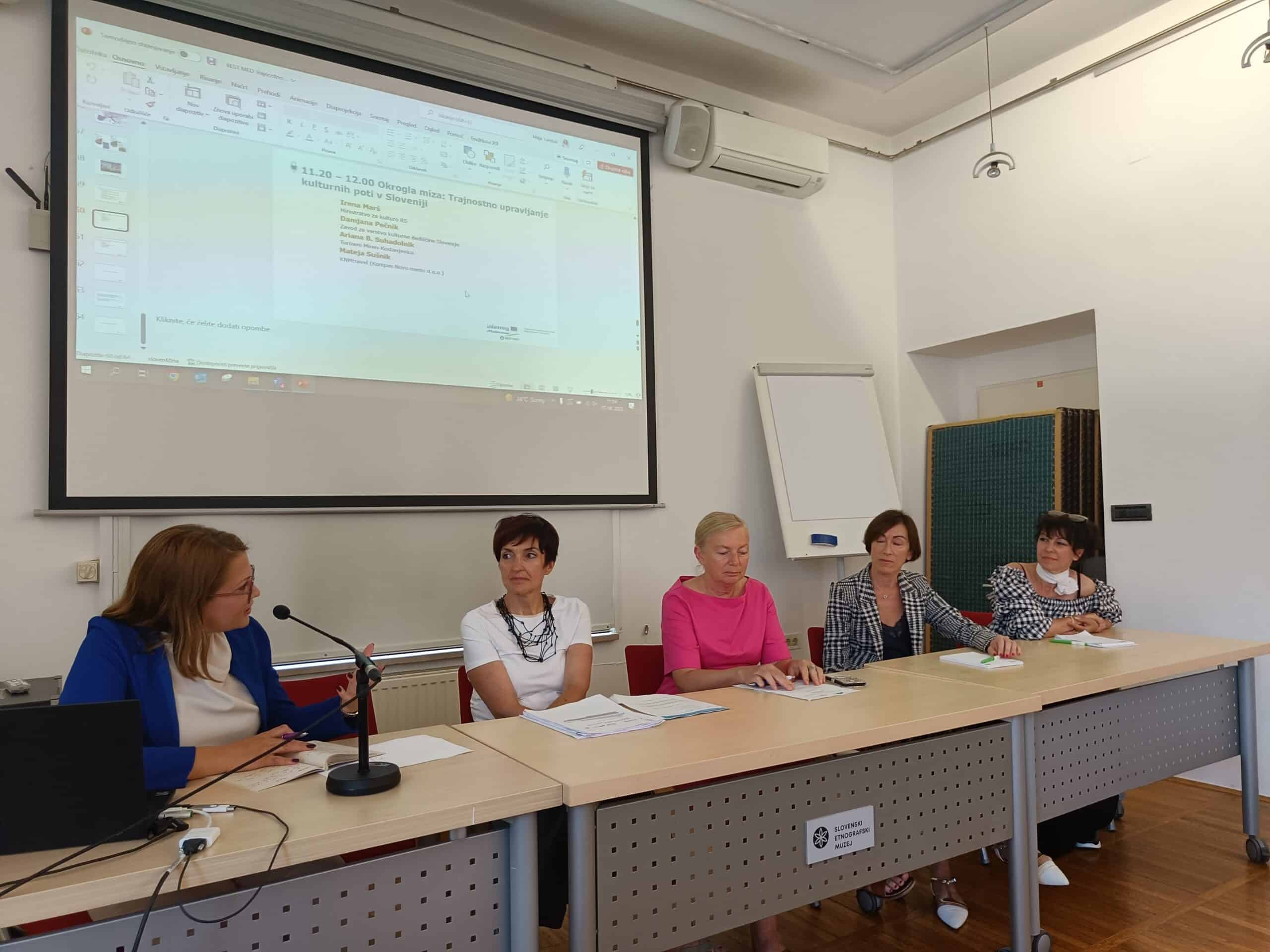
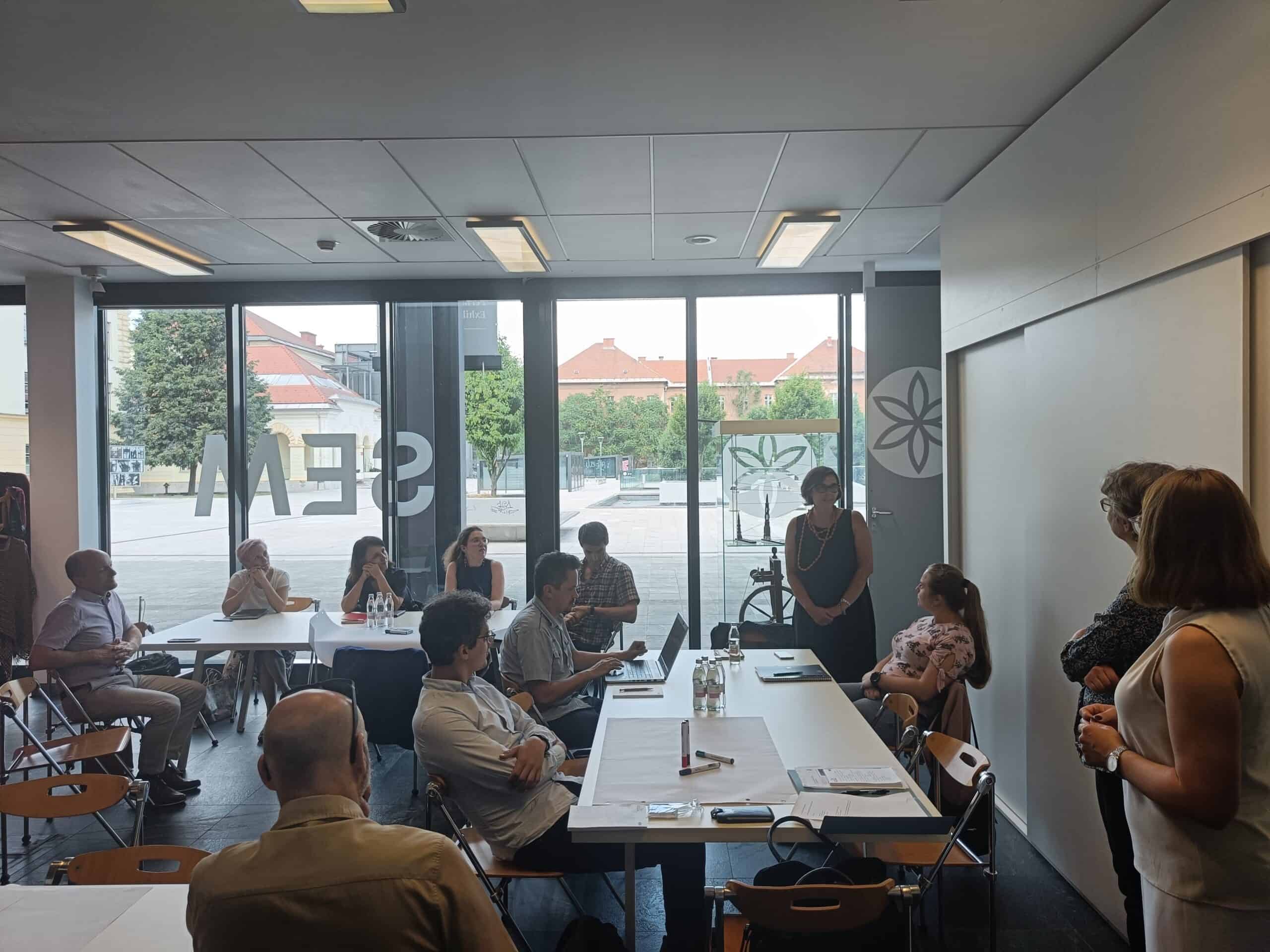
The central part of the event ended with a round table, where participants highlighted the opportunities to finance the further development and integration of cultural routes and the possibilities for developing tourism products and their promotion. In the continuation of the event, the attendees were able to attend one of the two thematic interactive workshops, which were aimed at sustainable management of cultural routes and the development of competencies in outdoor tourism.
The conclusion of the participants of the event was that in order to achieve long-term sustainable management of cultural and thematic routes, a collaboration between the routes in the form of an association of cultural and thematic routes in Slovenia is necessary. By forming an association, jointly representing interests and exchanging knowledge and experience, the routes in Slovenia will be able to develop products that will be attractive to both tourists and locals and will ensure the development of cultural tourism and the preservation of cultural heritage.