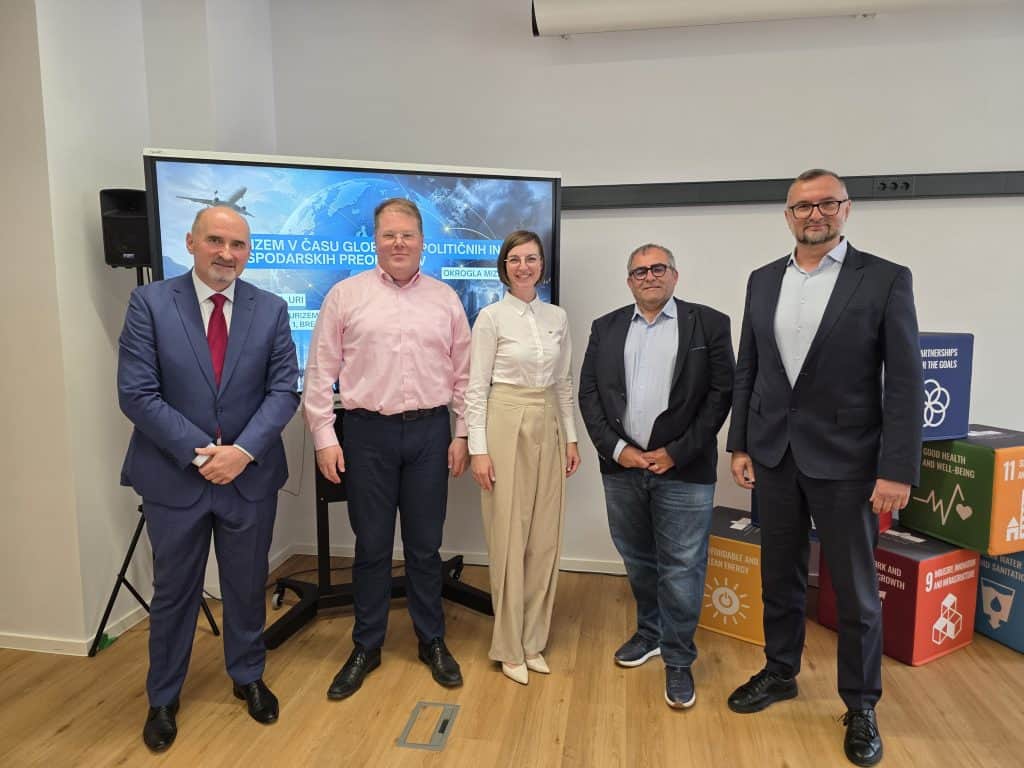
Faculty of Tourism UM hosted a round table on tourism in times of global political and economic upheaval
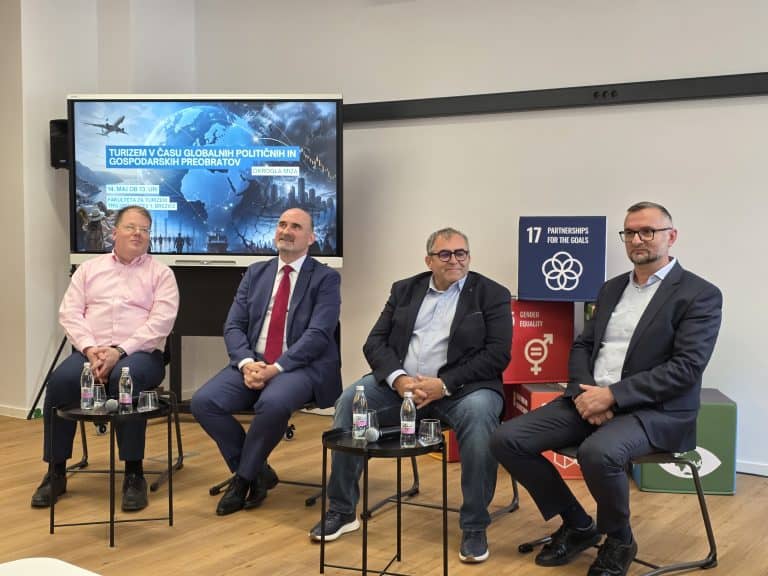
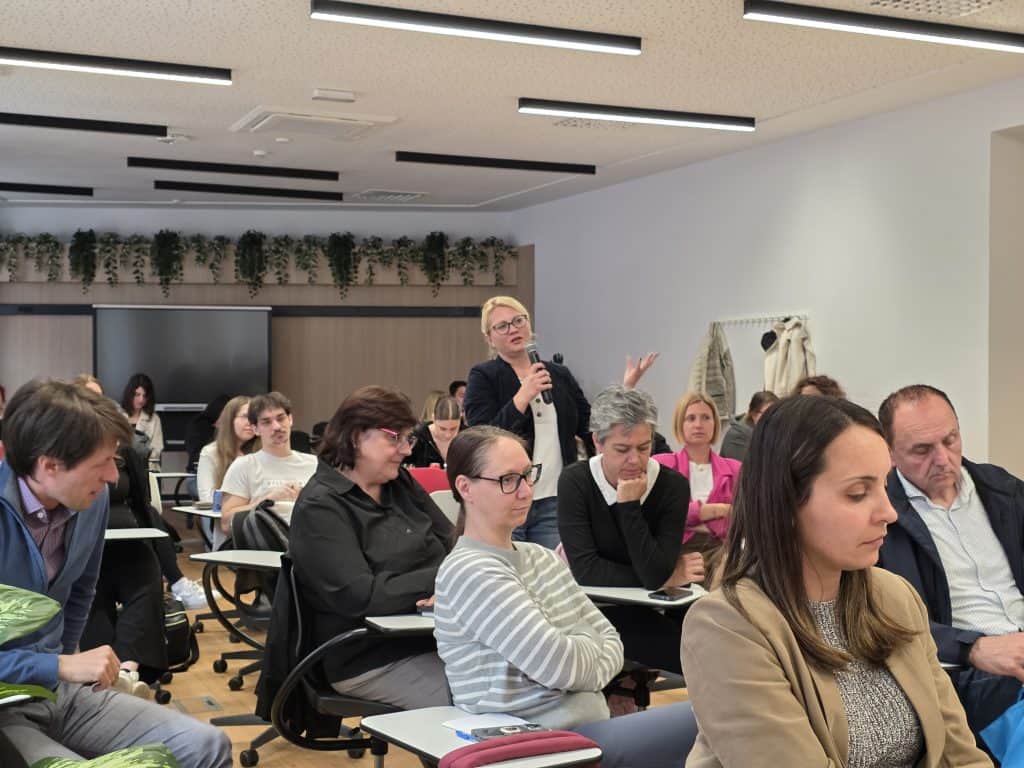
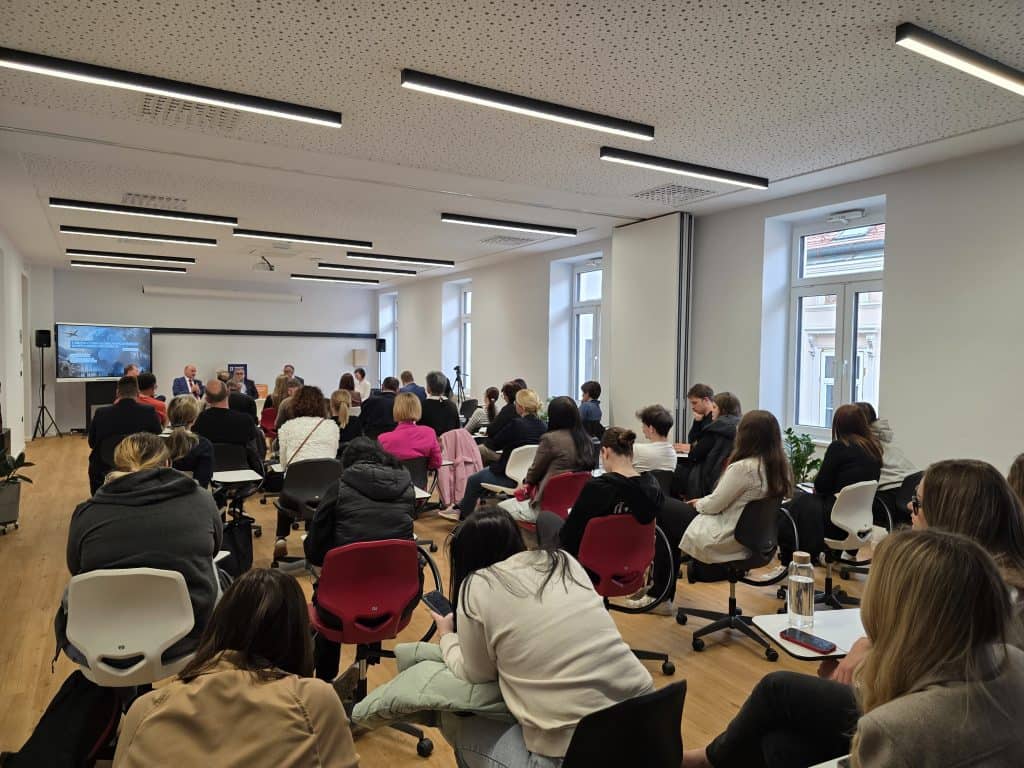
On Thursday, 14 May 2026, the Faculty of Tourism of the University of Maribor hosted a round table titled Tourism in Times of Global Political and Economic Upheaval. The discussion focused on the impact of current geopolitical, security and economic developments on tourism, tourist destinations and the wider social environment.
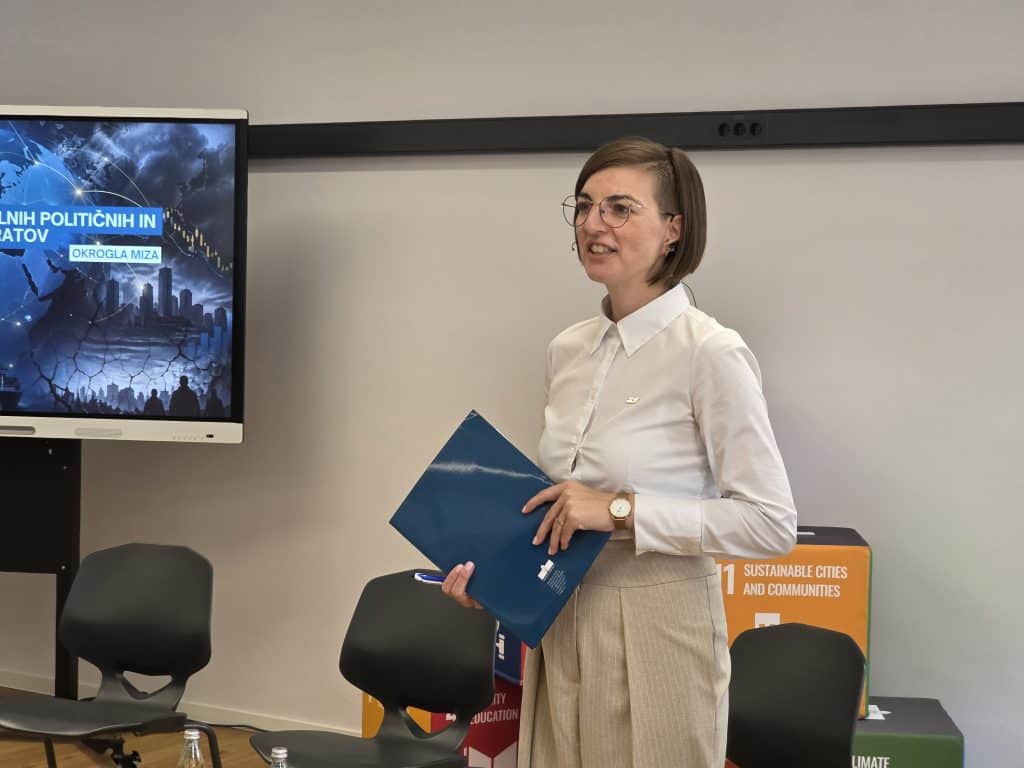
The event took place in the new premises of the Faculty of Tourism UM at Trg izgnancev 1 in Brežice. The discussion was moderated by Assoc. Prof. Dr Marjetka Rangus, Dean of the Faculty of Tourism UM.
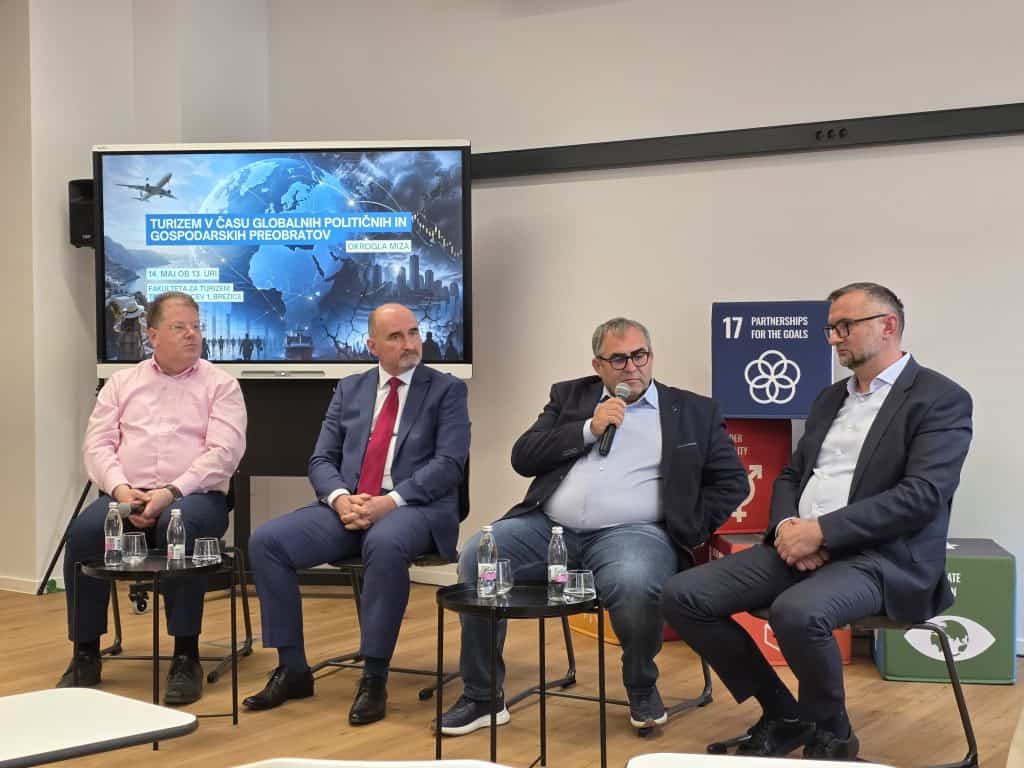
The round table brought together distinguished speakers from different fields: Prof. Dr Andrej Sotlar from the Faculty of Criminal Justice and Security, University of Maribor, an expert in national security, security policy and intelligence-security activities; Prof. Dr Boštjan Udovič from the Faculty of Social Sciences, University of Ljubljana, an expert in diplomacy, international political economy and development studies; Matej Knaus, founder and director of Palma Travel Agency, President of the Association of Travel Agencies of Slovenia and President of the Strategic Council of the Faculty of Tourism UM; and Janez Stušek, lawyer, criminal justice and security expert, and former Director of the Slovenian Intelligence and Security Agency.
The speakers approached the topic from several professional perspectives, including tourism, destination development, international relations, security, crisis management and the tourism industry. The discussion highlighted that tourism is not separate from broader political, economic and security developments, but closely intertwined with them. Global political and economic shifts, security challenges, wars, terrorist threats, natural disasters, health crises and other forms of instability directly affect tourist flows, travellers’ decisions, tourism providers and destination planning.
The speakers also reflected on past security and crisis events that have significantly shaped modern travel and changed the way safety and security are understood in tourism. Among other examples, they highlighted the terrorist attacks of 11 September 2001 as one of the major turning points for contemporary tourism, after which security procedures, travel habits and risk awareness changed substantially. They also assessed the current international situation and considered possible scenarios for the future.
The speakers pointed out that crises have become an integral part of today’s tourism environment, which means that destinations and tourism providers need to respond quickly, thoughtfully and strategically. Despite numerous challenges, tourism continues to demonstrate remarkable resilience and a strong capacity for recovery. Adaptability, an understanding of the wider social and security context, and timely risk management are therefore essential for the future development of tourism and tourist destinations.
The discussion also addressed safety and security as important factors in travel decision-making, as well as the behaviour of individuals before and during their travels. Since complete safety cannot be guaranteed, it is important that tourism providers, destinations and, above all, travellers understand potential risks and take into account the situation in specific areas when planning their trips.
The round table offered a timely and multifaceted reflection on how tourism is changing in times of global uncertainty. The speakers agreed that safety, stability, trust, adaptability and strategic planning will remain among the key factors in tourism, both locally and more broadly across Europe and the world.
The discussion also underlined that, throughout history, the ability to respond to change and adapt to new realities has played an important role in the dynamic development of European society. Today’s changing social reality therefore offers an opportunity to reflect on the role of Europe in the international environment, while also encouraging strategic reflection on future business and development plans in tourism.