Tourism Destinations and Risks: Expert Forum at the Faculty of Tourism
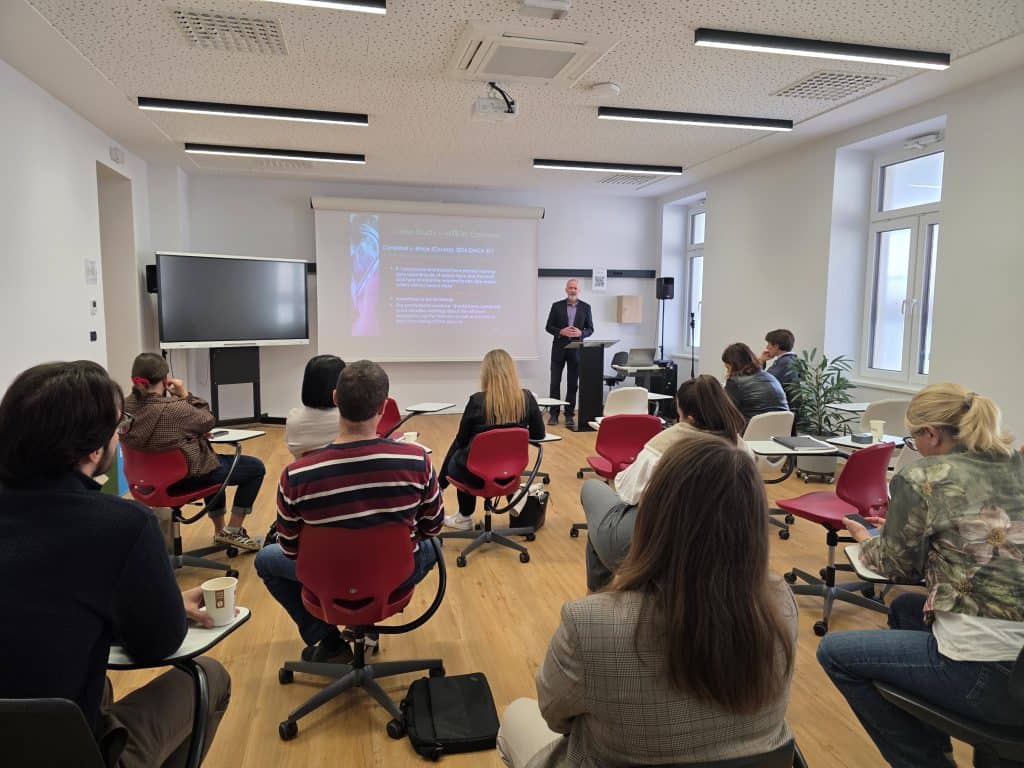
In early October, the Faculty of Tourism of the University of Maribor organised an expert forum on tourism destinations and risks. The main aim of the event was to raise awareness among tourism professionals and the wider community about potential risks and, more importantly, appropriate and responsible responses to them. In a time of rapid change and increasingly significant and diverse risks across numerous areas, tourism destinations still rarely take the time to reflect comprehensively on these highly complex issues. This was also highlighted during the discussion by representatives of destination management organisations and other tourism-related organisations from different parts of Slovenia.
The forum opened with a presentation by FT UM researcher Nejc Pozvek, who introduced the key questions that had prompted the organisation of the event. These primarily concerned the boundaries of responsibility for tourism destinations when considering, planning, marketing and selling tourism products in potentially risky circumstances.
What threats do we actually face, and what could go wrong? Who should be informed, how and when, if at all? How can destinations approach risk communication clearly and responsibly, particularly regarding the risks to which their visitors may be exposed?
Pozvek presented different types of crises, their time-related characteristics and the corresponding responses. He highlighted the importance of resilience, which extends far beyond crisis management, and particularly emphasised the vulnerability of tourists at destinations. When faced with unexpected and challenging situations, visitors may find themselves in particularly difficult circumstances due to their unfamiliarity with local conditions, such as weather, terrain and language barriers. This is why consistent, carefully considered communication is essential before visitors arrive, upon their arrival, during potential crises and after such events.
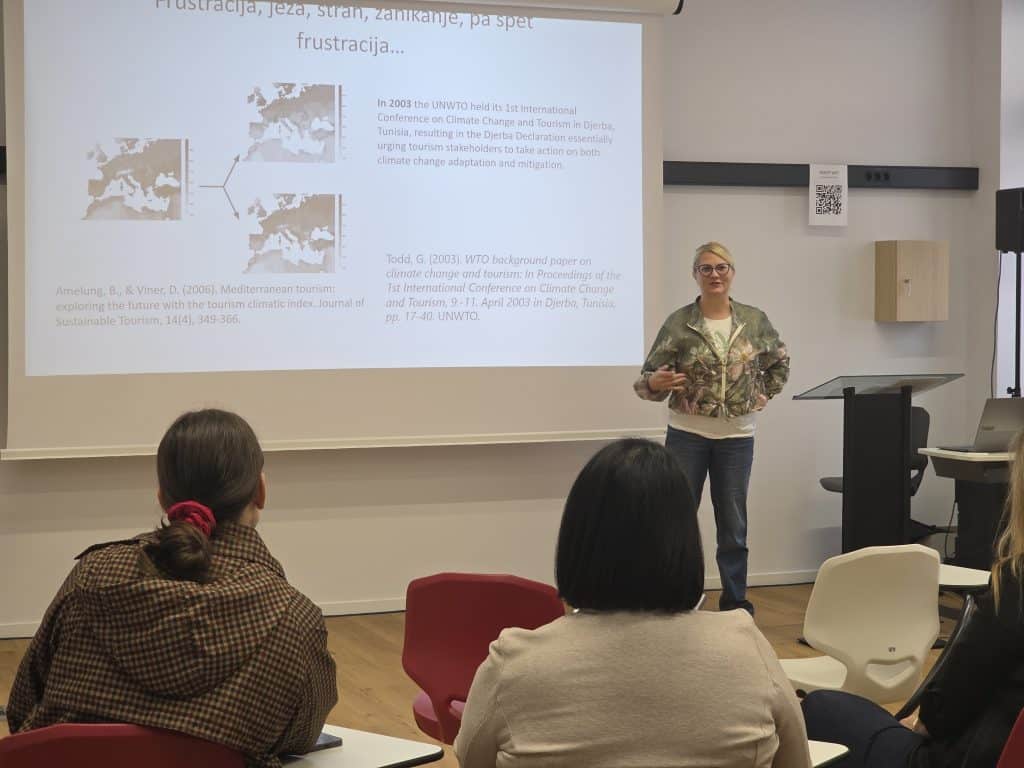
Dr Maja Turnšek, a professor at FT UM, focused her presentation on climate-related risks. She began by discussing the growing number of crisis events directly linked to climate change and presented projections and likely scenarios for future climate conditions, along with the adaptations that the new climate reality will require, particularly from the tourism sector.
She continued by presenting work carried out within the project "Foundations for Assessing Vulnerability and Adaptation to Climate Change in Statistical Regions". Using the Posavje region as an example, she presented an assessment of the exposure and vulnerability of tourism activities under different climate scenarios, together with recommended adaptation measures for the expected changes. She also stressed that efforts to adapt must not overshadow the importance of mitigating our own impacts on climate change.
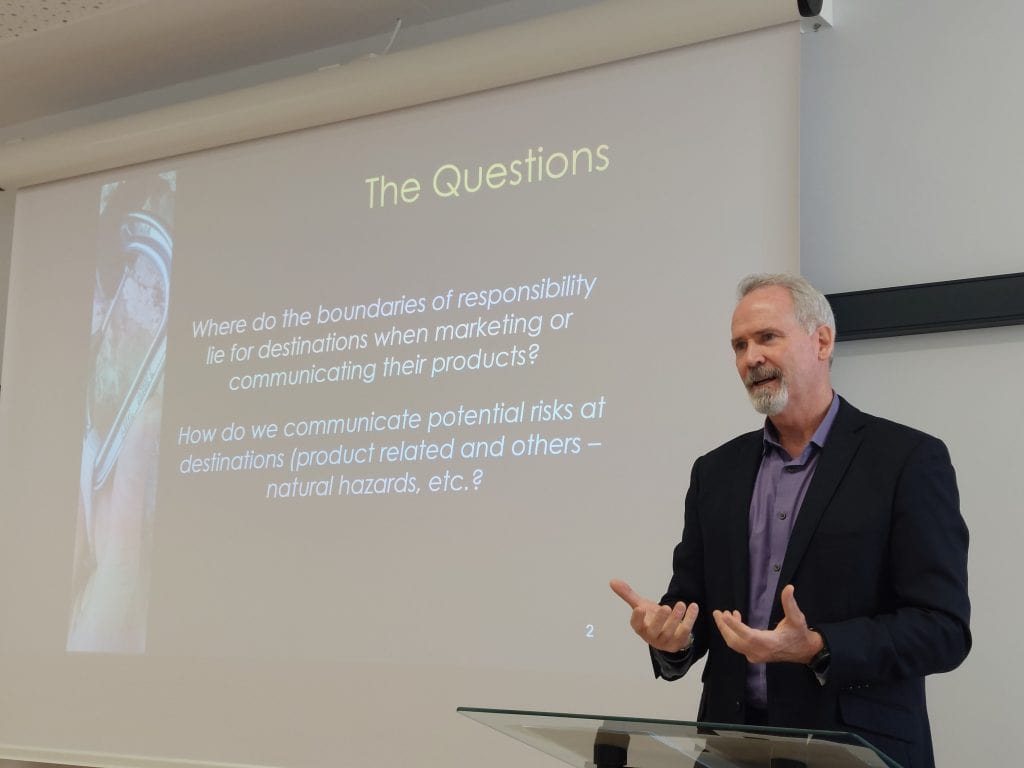
Jon Heshka, a tourism risk management expert from Thompson Rivers University in Kamloops, Canada, discussed how destinations and tourism providers can communicate risks without negatively affecting a destination's attractiveness or visitors' decisions to travel there.
He presented numerous examples, primarily from outdoor tourism activities, ranging from accidents and inadequate responses by destinations and businesses, including subsequent legal proceedings, to examples of good risk communication practices. These good practices are based on a comprehensive, professionally informed approach that includes recognising the hazards and risks visitors may face at a destination and communicating them with the highest possible level of responsibility.
The forum concluded with a moderated discussion on the challenges faced by Slovenian tourism destinations and businesses in managing and communicating tourism-related risks. The valuable exchange of opinions, experiences and perspectives brought to light a range of important and pressing issues, further confirming the relevance of the forum's theme.
The event ended with a shared commitment to continue raising awareness of the importance of effective risk management and communication in tourism through various activities and future opportunities.