


Call for Applications: FT UM Student Tutors for the Academic Year 2026/2027
The Student Council of the Faculty of Tourism, University of Maribor, is collecting applications for student tutors for the academic year 2026/2027.
We are publishing the Decision on the Announcement of the Procedure for the Application and Appointment of Student Tutors at the Faculty of Tourism of the University of Maribor. The application forms are attached to the published decision.
Student tutoring is an important form of support that helps students integrate into the study environment, understand the study process, exchange experiences, and successfully navigate their studies. Student tutors play an especially important role in supporting younger students, international students, and students who may need additional guidance during their studies.
Available tutoring positions
For the academic year 2026/2027, applications are open for the following positions:
- 2 student tutors for the full-time professional Bachelor programme,
- 2 student tutors for the part-time professional English-language Bachelor programme,
- 1 student tutor for the academic Bachelor programme,
- 1 student tutor for the full-time Master programme,
- 1 student tutor for the part-time English-language Master programme.
The Selection Committee will also appoint a coordinator of student tutors and a tutor for students with disabilities from among the selected candidates.
Who can apply?
Students of FT UM who meet the eligibility criteria set out in the internal instructions on the implementation of the tutoring system at the Faculty of Tourism may apply for the position of student tutor.
In the selection process, the committee will consider communication skills, a positive attitude toward tutoring work, knowledge of the study process at FT UM, the ability to accept and consider the opinions of others, awareness of broader student-related issues, and active participation in extracurricular activities.
A special requirement for tutors for part-time English-language programmes is good communication skills in a global foreign language. A tutor for students with disabilities must demonstrate an understanding of different types of disabilities and familiarity with measures for eliminating barriers for students with disabilities.
Tutor responsibilities and remuneration
Selected student tutors will be included in the FT UM tutoring system in the academic year 2026/2027. They will meet regularly with their assigned group of students and provide them with support. The minimum number of meetings during the academic year is five.
Student tutors will be required to keep records of their work and report regularly to the coordinator of the tutoring system at FT UM. Tutoring work includes meetings with students, preparation for these meetings, and participation in events related to the tutoring system.
Student tutors will receive financial compensation for their work. The hourly rate for tutoring is 20% higher than the minimum student hourly wage.
Selected tutors will attend an onboarding session organised by the University of Maribor Rectorate in September 2026, which will be held online via MS Teams, as well as an onboarding session at FT UM, which will take place in person in Brežice. Travel expenses for the in-person onboarding session will be reimbursed.
Students who have successfully completed the onboarding sessions in previous years and are reapplying for the student tutor call are not required to attend the training again.
Application deadline and submission
Applications must be submitted using the application form attached to the call, together with the required documents, no later than: Wednesday, 10 June 2026, by 11:00. Applications must be sent by email to: referat.ft@um.si. The email subject line must read: "Application for FT student tutor". Applications submitted after the deadline will be rejected as late.
Selection procedure
The Selection Committee will meet on Wednesday, 10 June 2026, after 11:00, to review the received applications. If necessary, the committee may conduct interviews with candidates within five working days after the opening of applications.
Student tutors, the coordinator of student tutors, and the tutor for students with disabilities are appointed by the Faculty Senate of FT UM for a period of one academic year. Selected candidates will be notified about their appointment by email.
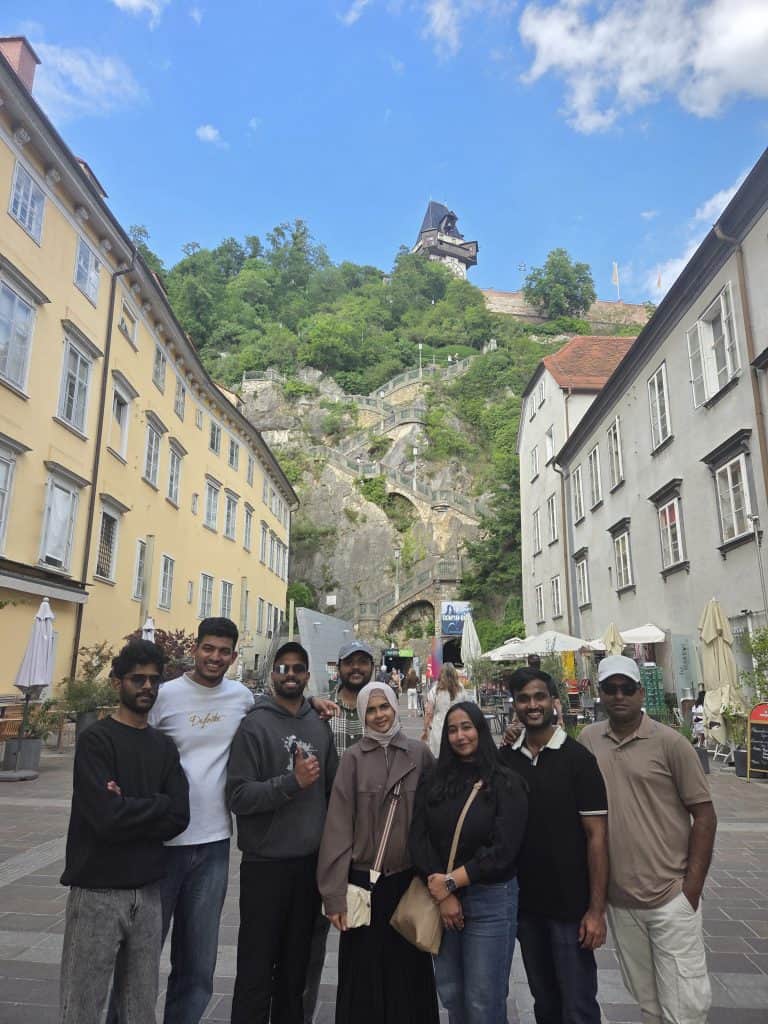
Second-year master’s students studying in the English-language programme in Ljubljana planned and carried out a two-day study visit to Graz as part of the course Practicum 3: From Idea to Execution of a Travel Itinerary.
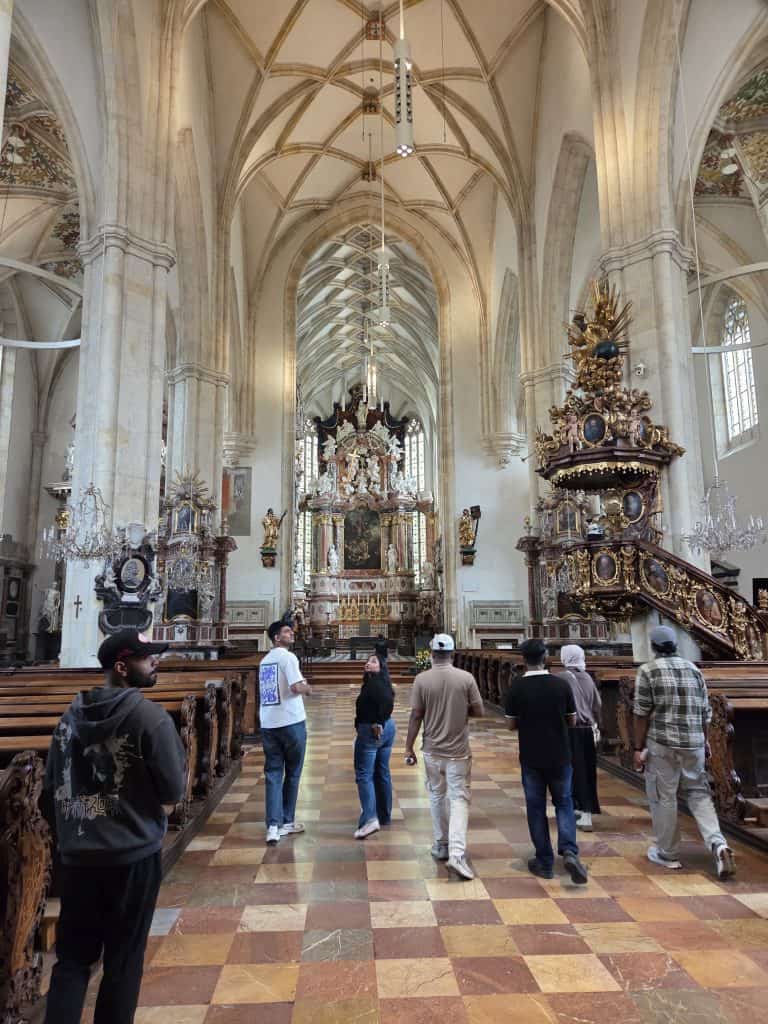
The visit took place from Friday, 22 May, to Saturday, 23 May 2026. Students explored Graz as a tourism destination and visited its key landmarks, including the Town Hall, the Cathedral, the castle area, the Clock Tower, the Murinsel – an artificial island on the Mur River – and the famous Styrian Armoury, one of the most important collections of its kind in Europe.
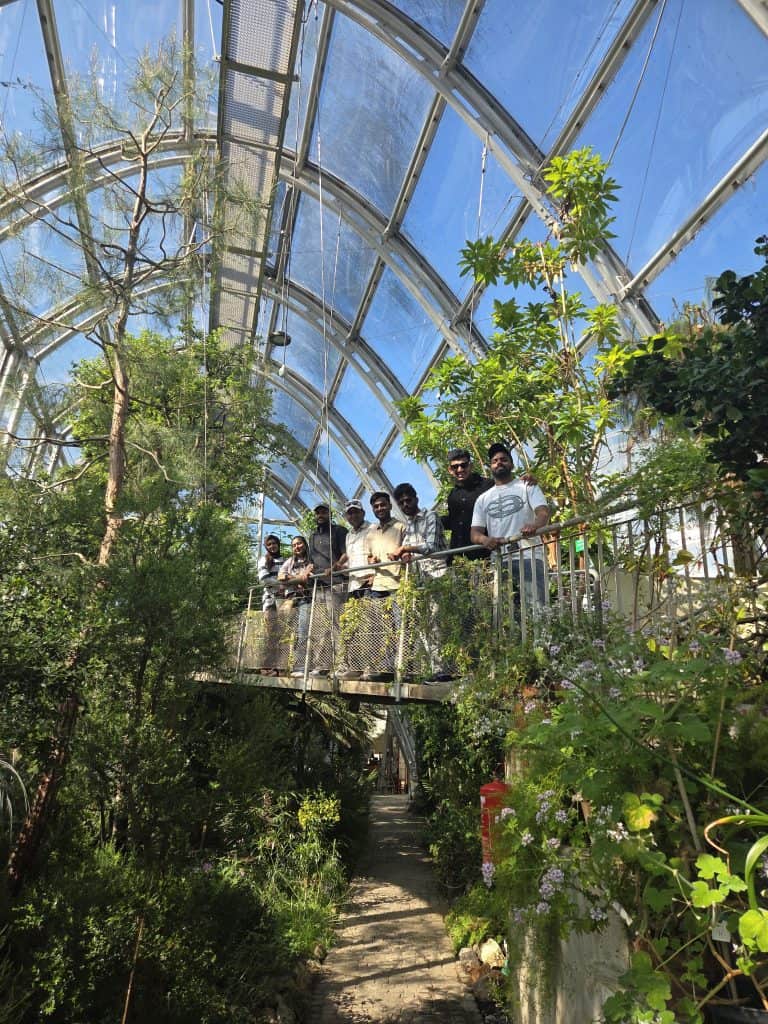
The programme also included a visit to the Botanical Garden of the University of Graz, where students discovered a greener, natural-science and educational side of the destination.
A special emphasis was placed on sustainability. Students travelled to Graz and back by train and used trams to move around the city.
The entire programme was designed, prepared and carried out by the students themselves – from planning the itinerary to its implementation on site. In this way, they transferred knowledge from the classroom into practice and experienced first-hand what it means to organise a trip from the initial idea to its final execution.
In mid-June, the Faculty of Tourism of the University of Maribor will host Prof. Dr. Fatema Kawaf from Nottingham Trent University in the United Kingdom, an established researcher in the fields of digital marketing, visual methods, and the study of digital experiences.
At the Faculty of Tourism UM, she will deliver a two-day workshop entitled Capturing Digital and AI-mediated Experience: A Screencast Videography Approach, which will take place on Tuesday, 16 June, and Wednesday, 17 June 2026, at the Faculty of Tourism UM in Brežice (Room P6, at Trg izgnancev 1). Registration is available via the registration form.
The workshop will introduce participants to Screencast Videography (SCV) as a visual and qualitative research method for studying digital experiences, including increasingly relevant interactions between humans and artificial intelligence. It is designed for participants with different levels of prior knowledge, including those who have not previously worked extensively with visual methods.
The workshop is particularly relevant for doctoral students, early-career researchers, academic assistants, researchers, and academic staff, as well as anyone interested in contemporary qualitative research approaches, digital experiences, artificial intelligence, visual methods, digital marketing, and the study of user interactions in digital environments.
About the Visiting Professor
Prof. Dr. Fatema Kawaf is a Professor in Digital Marketing and Director of the Marketing and Consumer Studies Research Group at Nottingham Trent University. She is an innovator in visual methods and the founder of Screencast Videography, a qualitative visual method for studying digital experiences and interactions.
She is also the Chair of the UK Academy of Marketing Visual Methods SIG. Her award-winning research is situated at the intersection of digital marketing, consumer research, and information systems, and has been published in leading academic journals in the fields of marketing and information systems.
Workshop Content
The first day of the workshop will focus on understanding the philosophical and methodological foundations of SCV. Participants will learn about its visual, interpretive, and experiential underpinnings, consider the types of research questions that can be addressed using this method, and begin developing a research question related to their own area of interest.
On the second day, the workshop will move from methodological design to practical application. Participants will refine their research questions, consider the practical and ethical dimensions of collecting screencast data, and produce a short screencast video. They will also be introduced to the early stages of data analysis, moving from observation and description to coding, interpretation, and the development of research insights.
By the end of the workshop, participants will have gained an understanding of how SCV can be used to study digital and AI-mediated experiences and will have developed the foundations of a small research design that they can further develop in their own research, teaching, or professional work.
Workshop Programme
Day 1: Foundations and Fieldwork
Tuesday, 16 June 2026
| Time | Session |
|---|---|
| 09:30–10:00 | Arrival, coffee and workshop opening |
| 10:00–12:00 | Philosophical and Methodological Foundations |
| 12:00–12:30 | Coffee break |
| 12:30–14:00 | Methodological A–Z of SCV |
Day 2: Analysis, Theorising, and Dissemination
Wednesday, 17 June 2026
| Time | Session |
|---|---|
| 11:00–11:30 | Coffee and arrival |
| 11:30–13:30 | Screencasting in Action |
| 13:30–14:00 | Coffee break |
| 14:00–16:00 | SCV Data Analysis |
| 16:00–16:30 | End of workshop and reflections |
| 18:00–20:00 | Informal networking dinner at Reset Brewery, Brežice |
The informal networking dinner is at participants’ own expense.
Registration
For organisational purposes, please register via the REGISTRATION FORM.
All interested participants are warmly invited to attend. The workshop offers an excellent opportunity to explore a contemporary research method that opens up new possibilities for studying digital, visual, and AI-mediated experiences.
On 20 May 2026, the international conference REX Conference 2026: Rethinking Student Mobility in Higher Education took place at the University of Maribor. The conference was organised by the Faculty of Tourism, University of Maribor, within the framework of the Erasmus+ REX project.
The event brought together more than 100 participants from various countries and institutions, offering a space for discussion on the future of student mobility in higher education. The conference focused on innovative approaches to learning, international cooperation, and the integration of digital technologies such as virtual reality, artificial intelligence and other tools of digital transformation.
The conference was opened by Assist. Prof. Dr. Marjetka Rangus, Dean of the Faculty of Tourism, University of Maribor. The keynote lecture was delivered by Dr. Charles Mansfield, who presented valuable insights into the future of higher education and international mobility.
The conference also presented the results and activities of the REX project. Project-related content was introduced by the partners: Dr. Vita Petek and Dr. Jasna Potočnik Topler from the University of Maribor, Dr. Erdem Erten and Dr. Kivanc Kilinc from İzmir Institute of Technology, Justine Cauvas from the University of Versailles Saint-Quentin-en-Yvelines, Halvard Ones from Western Norway University of Applied Sciences, and Ida Velthoven from the European University Foundation.
The programme included four panel sessions addressing virtual reality in education, reflective learning, artificial intelligence, digital transformation, and the future of learning and mobility. Contributions were presented by Miguel Mira, Tjaša Alegro, Kamran Khan, Mihaela Franjić, Fidha Moothedath, Dr. Valentina Jošt Lešer, Matteo Zaralli and Filomena Vignjevikj.
The conference provided an excellent opportunity for knowledge exchange, sharing good practices, networking, and strengthening international cooperation among higher education institutions and other stakeholders.
We sincerely thank all speakers, partners, participants, organisers and supporters who contributed to the successful implementation of REX Conference 2026.


You are warmly invited to the REX Conference 2026: Rethinking Student Mobility in Higher Education, taking place on 20 May 2026 at the University of Maribor, Slovenia, from 09:00 (Brussels time, CET/CEST).
The conference will explore student mobility through VR and immersive technologies and will be held in a hybrid format (on-site & online via Microsoft Teams).
Online participation:
https://teams.microsoft.com/meet/340911380664593?p=baBZcMbtX74k2SvTkG
Meeting ID: 340 911 380 664 593
Passcode: se3Q6jS7
Please feel free to share this invitation within your networks.
We look forward to your participation.
Best regards,
Erasmus+ project REX team
More about the project: https://projects.uni-foundation.eu/rex/news/call-for-papers-rex-conference-2026/
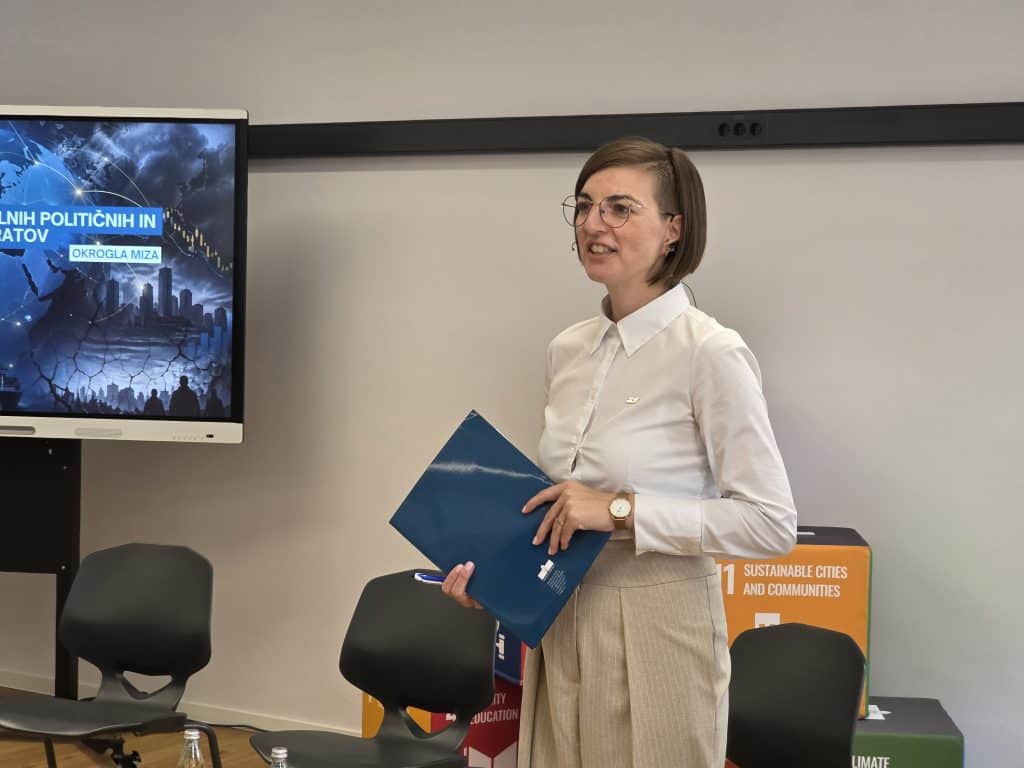
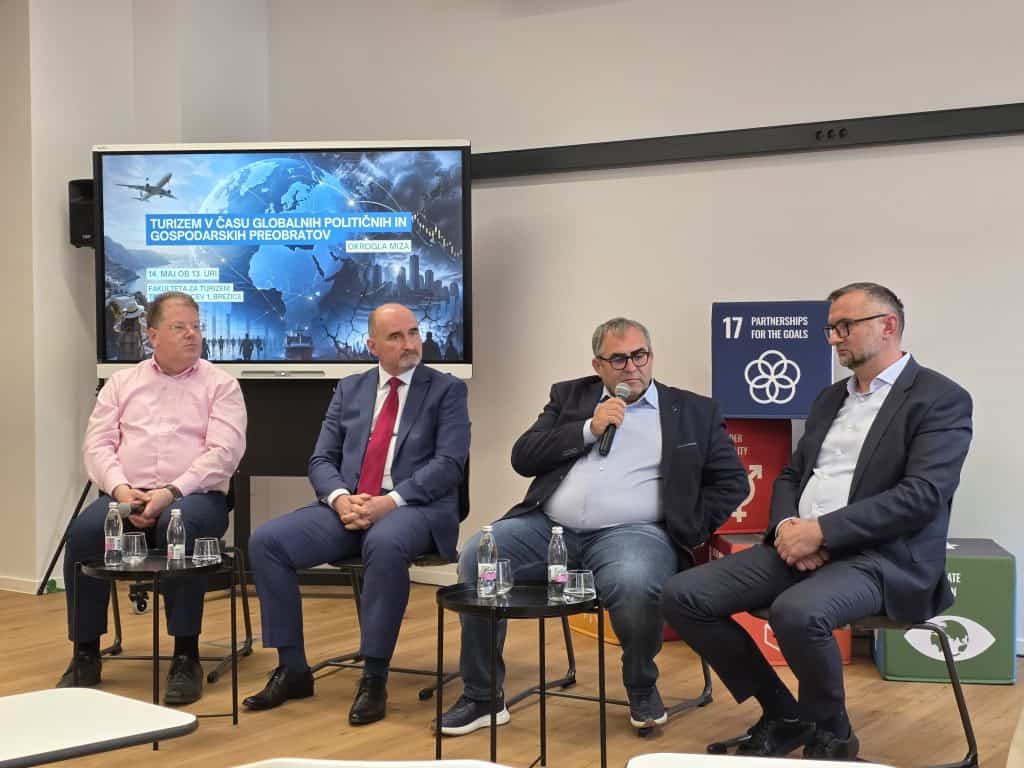
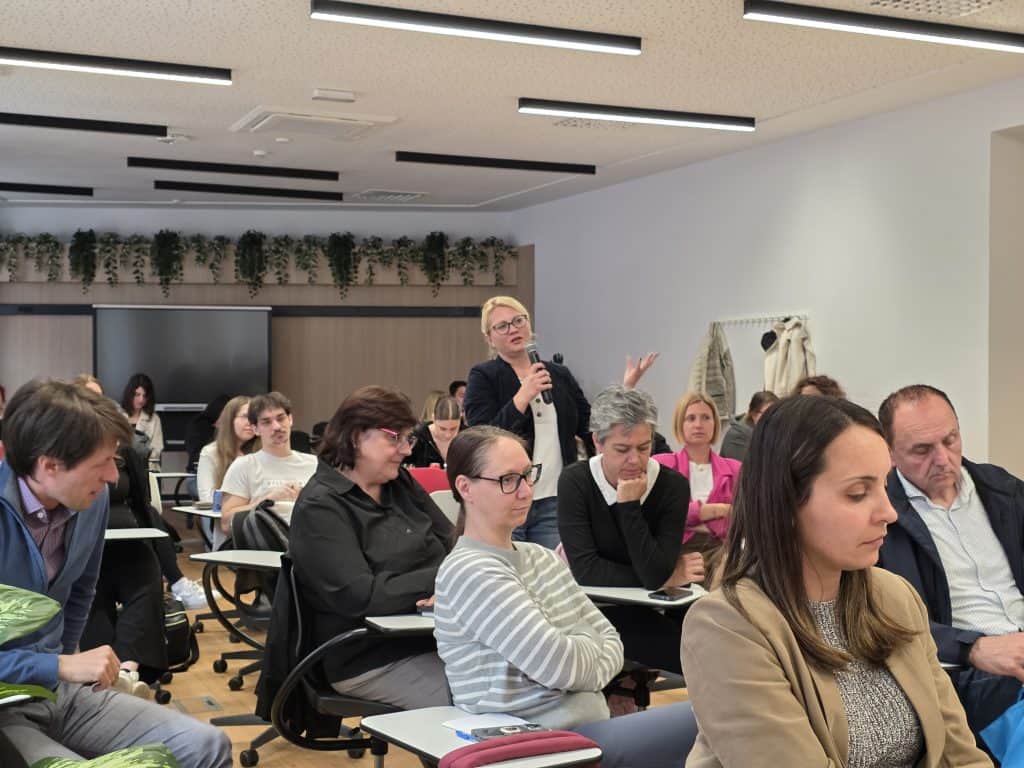
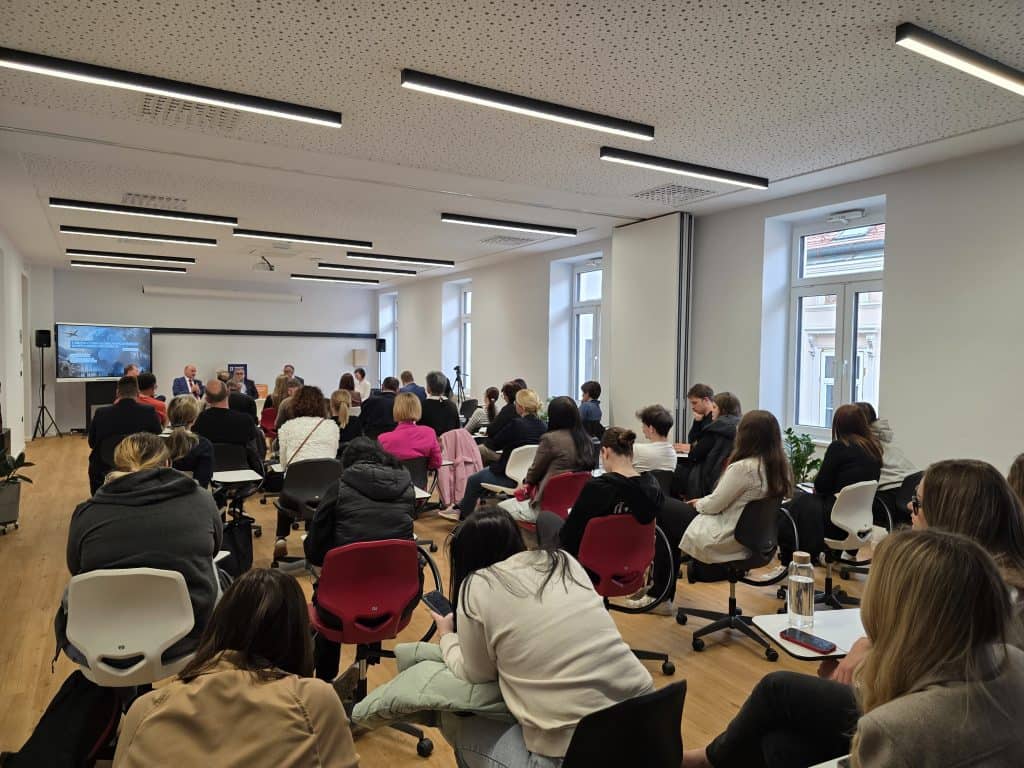
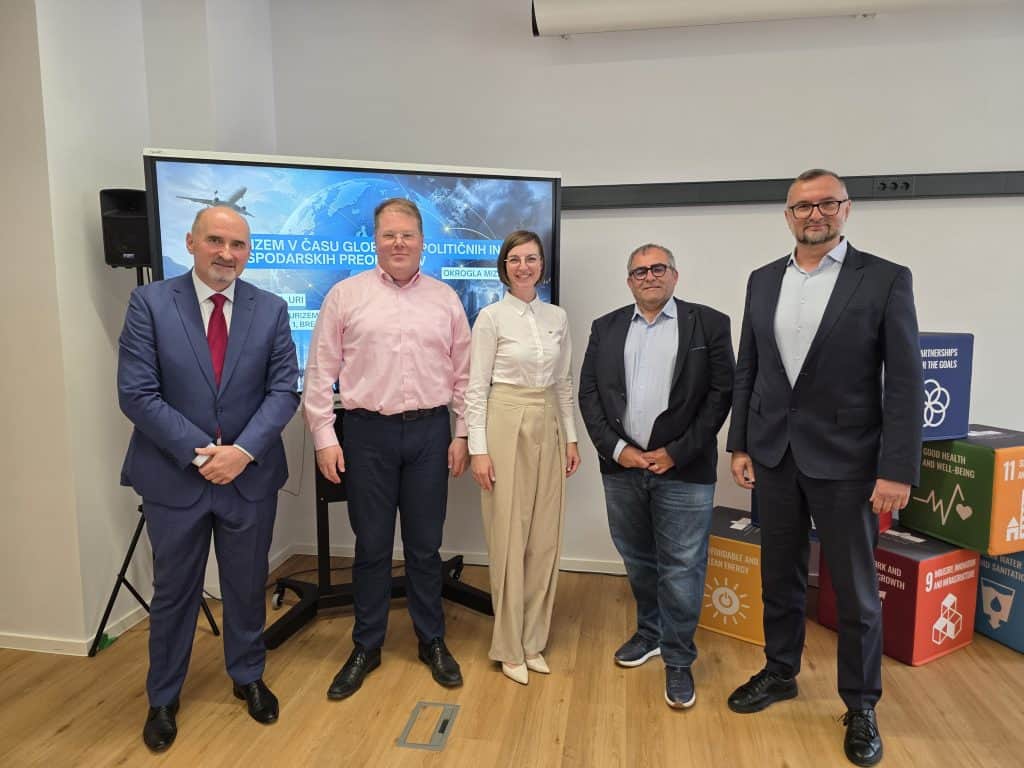
On Thursday, 14 May 2026, the Faculty of Tourism of the University of Maribor hosted a round table titled Tourism in Times of Global Political and Economic Upheaval. The discussion focused on the impact of current geopolitical, security and economic developments on tourism, tourist destinations and the wider social environment.
The event took place in the new premises of the Faculty of Tourism UM at Trg izgnancev 1 in Brežice. The discussion was moderated by Assoc. Prof. Dr Marjetka Rangus, Dean of the Faculty of Tourism UM.
The round table brought together distinguished speakers from different fields: Prof. Dr Andrej Sotlar from the Faculty of Criminal Justice and Security, University of Maribor, an expert in national security, security policy and intelligence-security activities; Prof. Dr Boštjan Udovič from the Faculty of Social Sciences, University of Ljubljana, an expert in diplomacy, international political economy and development studies; Matej Knaus, founder and director of Palma Travel Agency, President of the Association of Travel Agencies of Slovenia and President of the Strategic Council of the Faculty of Tourism UM; and Janez Stušek, lawyer, criminal justice and security expert, and former Director of the Slovenian Intelligence and Security Agency.
The speakers approached the topic from several professional perspectives, including tourism, destination development, international relations, security, crisis management and the tourism industry. The discussion highlighted that tourism is not separate from broader political, economic and security developments, but closely intertwined with them. Global political and economic shifts, security challenges, wars, terrorist threats, natural disasters, health crises and other forms of instability directly affect tourist flows, travellers’ decisions, tourism providers and destination planning.
The speakers also reflected on past security and crisis events that have significantly shaped modern travel and changed the way safety and security are understood in tourism. Among other examples, they highlighted the terrorist attacks of 11 September 2001 as one of the major turning points for contemporary tourism, after which security procedures, travel habits and risk awareness changed substantially. They also assessed the current international situation and considered possible scenarios for the future.
The speakers pointed out that crises have become an integral part of today’s tourism environment, which means that destinations and tourism providers need to respond quickly, thoughtfully and strategically. Despite numerous challenges, tourism continues to demonstrate remarkable resilience and a strong capacity for recovery. Adaptability, an understanding of the wider social and security context, and timely risk management are therefore essential for the future development of tourism and tourist destinations.
The discussion also addressed safety and security as important factors in travel decision-making, as well as the behaviour of individuals before and during their travels. Since complete safety cannot be guaranteed, it is important that tourism providers, destinations and, above all, travellers understand potential risks and take into account the situation in specific areas when planning their trips.
The round table offered a timely and multifaceted reflection on how tourism is changing in times of global uncertainty. The speakers agreed that safety, stability, trust, adaptability and strategic planning will remain among the key factors in tourism, both locally and more broadly across Europe and the world.
The discussion also underlined that, throughout history, the ability to respond to change and adapt to new realities has played an important role in the dynamic development of European society. Today’s changing social reality therefore offers an opportunity to reflect on the role of Europe in the international environment, while also encouraging strategic reflection on future business and development plans in tourism.
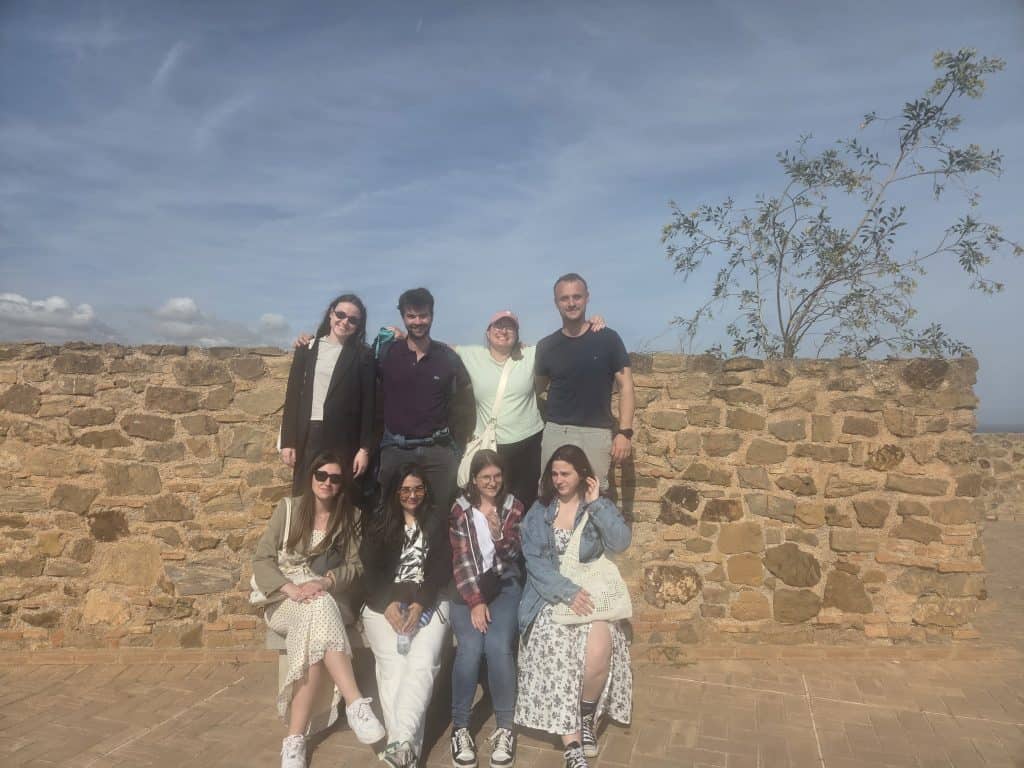
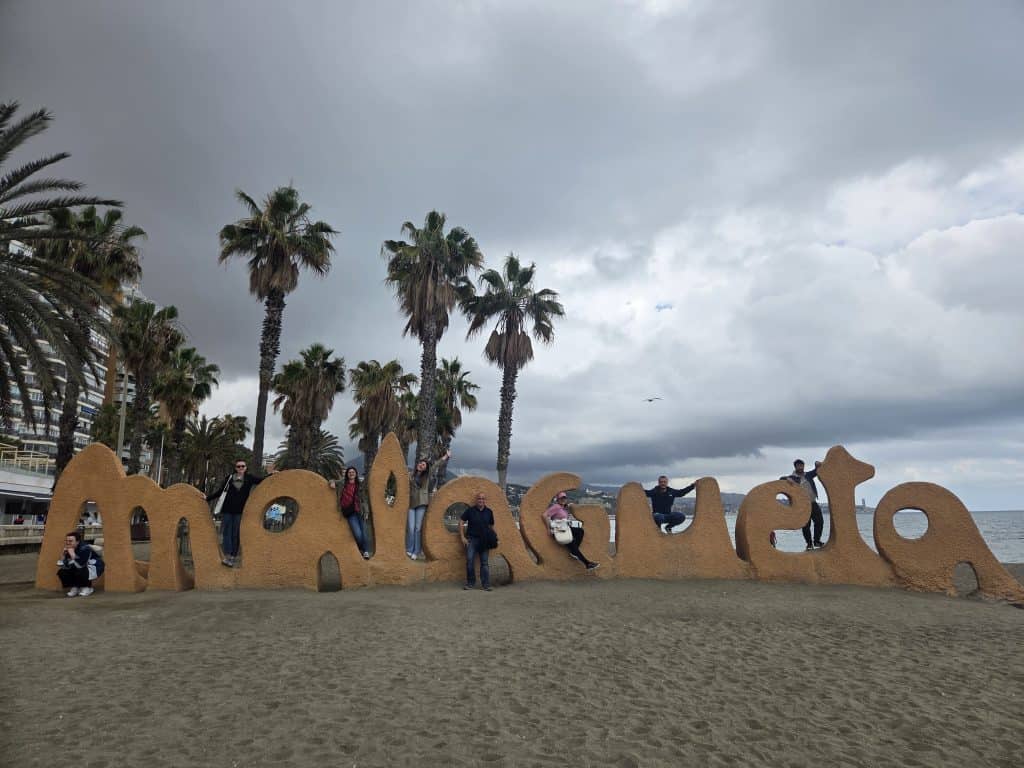
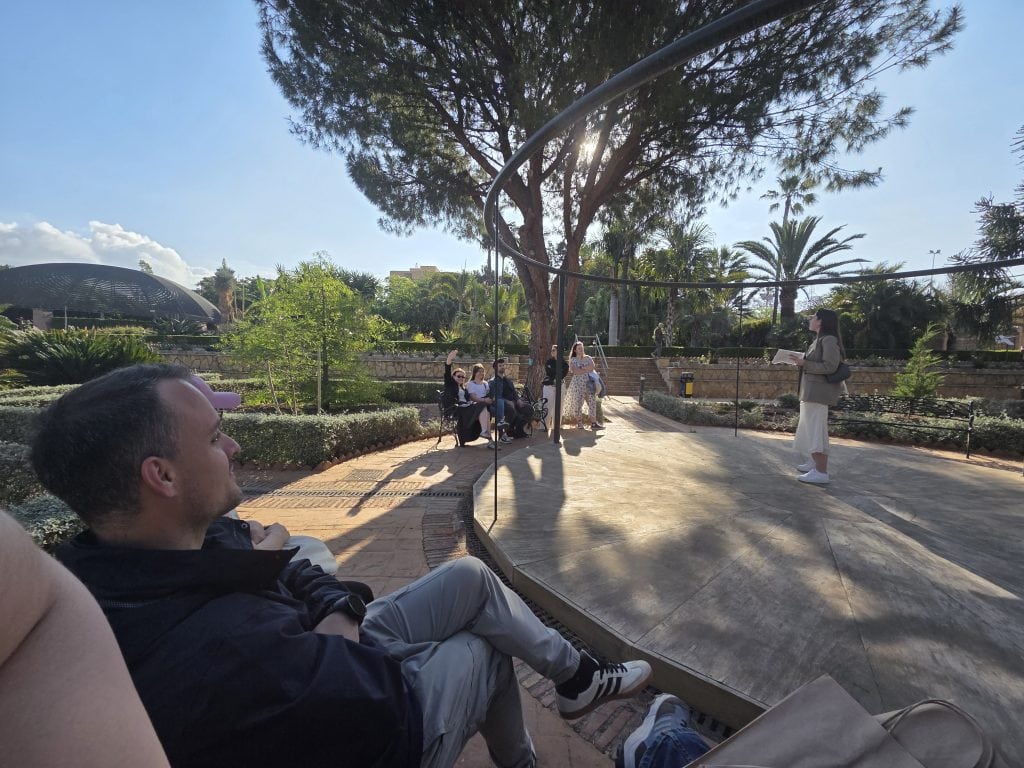
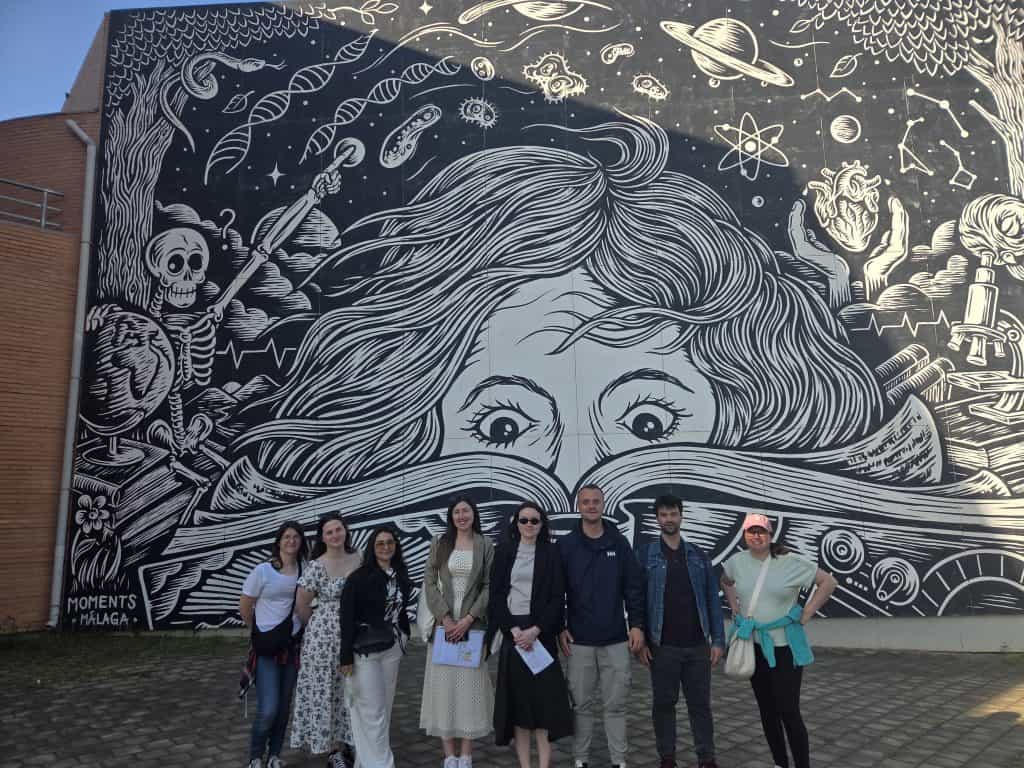
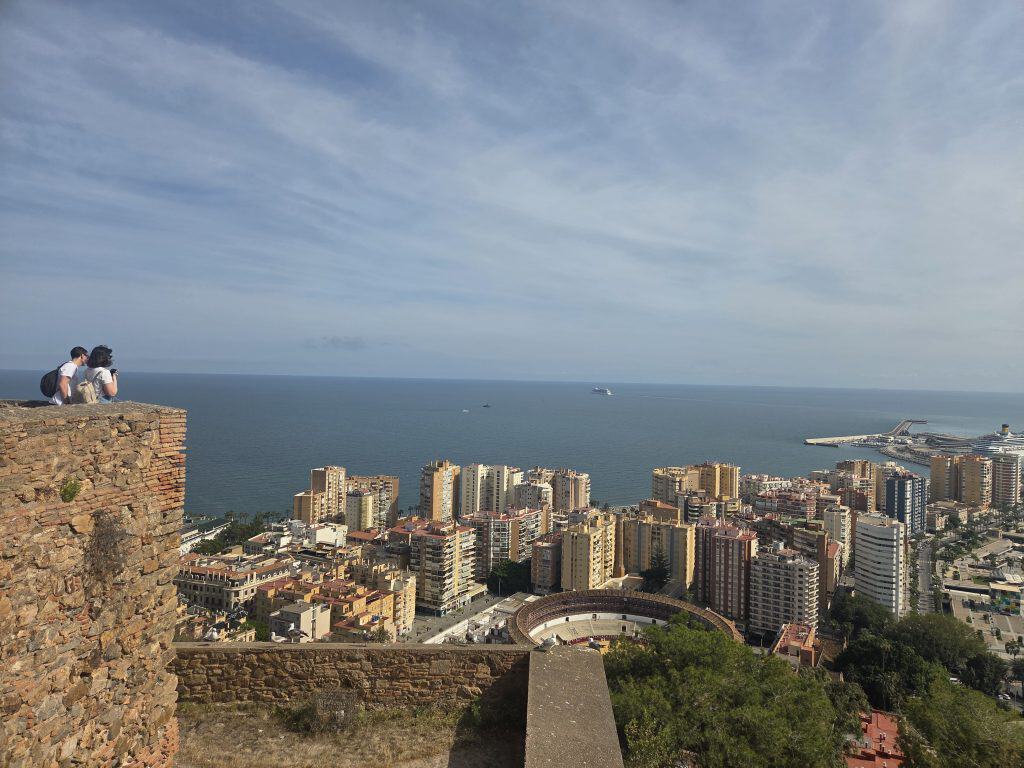
Second-year students of the master’s study programme Tourism Destinations and Experiences travelled to Malaga as part of the course Practicum 3: From the Idea to the Implementation of a Trip.
Within the course, students explore the entire process of planning and carrying out a trip – from developing the initial idea, preparing the programme and organising individual steps to the actual implementation in the field. They also take on the role of tourist guides, transferring the knowledge gained during their studies directly into practice.
Malaga offered them a valuable learning experience in a vibrant Mediterranean environment, shaped by cultural heritage, cuisine and the lively rhythm of the city. Such practical experiences are an important part of tourism studies, as they enable students to better understand destinations, travel organisation and tourist guiding through direct fieldwork.
At the Faculty of Tourism, we are extremely proud of our doctoral programme and our doctoral students. Therefore, we warmly welcome the initiative to mark 13 May for the first time this year as the EUROPEAN DOCTORAL DAY, a day dedicated to individuals who, through their research work, help shape the future of European society, science, economy, and culture. This day is particularly important because it is not only a recognition of academic excellence, but also a tribute to the perseverance, curiosity, and dedication of all doctoral candidates and holders of doctoral degrees who make significant contributions to the development of knowledge and the progress of society.
Doctoral studies do not merely represent the highest level of education. They are also, or perhaps above all, a journey of personal and intellectual growth. Research often involves years of in-depth work, searching for answers to complex questions, facing uncertainty, and pushing the boundaries of existing knowledge. This is precisely why the European Doctoral Day carries such special significance: it raises awareness of the value of research, critical thinking, and creativity in a time of rapid social, technological, and environmental change.
Europe is founded on knowledge, innovation, and cooperation. Doctoral researchers play a crucial role in this process, as their work contributes to a better understanding of the world, the development of new solutions, and the improvement of quality of life. Their impact extends far beyond universities - from the arts, humanities, and technology to tourism, sustainable development, economics, social sciences, and medicine.
The first European Doctoral Day is also an opportunity to reflect on the importance of supporting young researchers, creating a stimulating research environment, and strengthening connections between academia and society. At the same time, it reminds us that knowledge is one of the most valuable assets of contemporary Europe.
May 13 be a day when we are especially reminded of the vital role of the research spirit, scientific curiosity, and all those who believe that knowledge can change the world for the better.
We would like to inform you that the Faculty of Tourism, University of Maribor, will be closed from Saturday, 25 April 2026, to Sunday, 3 May 2026, due to collective leave (28, 29, and 30 April 2026) and public holidays.
During this period:
- no study process will take place,
- we will not be reachable via email,
- it will not be possible to receive postal deliveries addressed to the Faculty of Tourism UM.
Thank you for your understanding.
At University of Maribor, general, direct and secret elections for the Rector will take place on 12 May 2026, for a four-year term.
The following candidates are running for the position of Rector:
- Prof. Dr Dean Korošak
- Prof. Dr Mitja Slavinec
Presentation of candidates
The candidates will also present themselves at the Faculty of Tourism UM, where you will have the opportunity to learn more about their programmes and vision for the university, as well as ask questions.
The presentation will take place on Wednesday, 15 April 2026, at 14:00 in Lecture Room 4 (Trg izgnancev 1, Brežice).
Who can be elected as Rector?
A full professor employed full-time at the University of Maribor on a permanent contract, actively involved in teaching and research, and recognised as a higher education teacher of the university, may be elected Rector. The candidate must demonstrate the ability to contribute to the development of educational, scientific-research and professional activities, as well as possess appropriate leadership experience, expertise and personal integrity.
Who has the right to vote?
The Rector is elected by three groups of voters:
- higher education teachers, researchers, assistants with research titles, higher education associates and other staff involved in the teaching process,
- students,
- other university employees.
Where will voting take place at the Faculty of Tourism?
Voting will also take place at the Faculty of Tourism UM (Brežice - CPB 36) on 12 May 2026.
More information about the rector elections and the candidates’ programmes is available on the University of Maribor website: https://www.um.si/o-univerzi/organiziranost/volitve-rektorja/
You are kindly invited to attend the candidates’ presentation and take an active part in the electoral process.